Minnetonka Commercial Roofing Contractor
Minnetonka Corporate and Office Park Roof Systems
Commercial properties in Minnetonka carry a wide range of flat and low-slope roof systems — from the EPDM membranes installed on office parks built in the 1980s along the I-494 corridor to newer TPO installations on medical facilities and professional buildings developed in the 2000s and beyond. The Opus area, Ridgedale corridor, and the commercial zones along Minnetonka Boulevard represent concentrations of property where rooftop mechanical equipment loads, drainage performance, and membrane condition directly affect building operations and tenant retention. Facilities managers overseeing multi-building portfolios in Minnetonka deal with roof systems at different life stages simultaneously — some approaching end of rated lifespan, others needing only inspection and minor maintenance. Understanding what each system requires, and when replacement becomes more cost-effective than continued repair, is the core decision most Minnetonka commercial property owners face on a rolling cycle. Freeze-thaw cycling through Minnesota winters creates predictable stress points on seams and flashings — particularly on older EPDM installations where seam adhesives have degraded and membrane shrinkage has begun pulling flashings away from parapet walls. Properties with flat roofs in Minnetonka that have not had a documented inspection in two or more years are carrying risk they may not be aware of until a ceiling failure in an occupied tenant space makes the problem impossible to ignore.
Medical Facilities and Retail Properties Roofing
Medical office buildings, retail centers, and mixed-use commercial properties in Minnetonka operate under maintenance expectations that differ substantially from industrial or warehouse buildings elsewhere in the metro. Occupied buildings — whether a medical office building near Ridgedale or a professional services campus off Plymouth Road — cannot tolerate unexpected water intrusion events. The cost of a ceiling failure in a medical exam room or a corporate office space extends well beyond the roof repair itself into tenant disruption, equipment damage, and business continuity risk that facilities managers are measured on. This reality shapes how commercial roofing decisions get made in Minnetonka: the bar for documentation, pre-winter inspection, and proactive seam maintenance is higher than it is for unoccupied commercial properties. TPO has become the replacement membrane of choice for Minnetonka's corporate office buildings and medical facilities, primarily for its heat-welded seam performance and reflective surface characteristics in Minnesota's heating-dominant climate. EPDM remains appropriate for older buildings with simple flat roof profiles, particularly where budget is the primary constraint and the existing assembly can support a properly detailed replacement system. Rooftop mechanical equipment — standard on Minnetonka's medical and office buildings — requires careful penetration detailing that generic multi-trade contractors consistently underperform on, and that becomes the most common source of early system failure after installation.
Commercial Flat Roof Replacement in Minnetonka
Flat roof replacement in Minnetonka commercial buildings requires more than membrane selection — it requires a contractor who understands the building's structural context, existing assembly condition, occupancy status, and ownership timeline before recommending a system. The corporate office parks along the I-494 corridor and the commercial properties near the Opus area frequently present roof assemblies with multiple recover layers, aging insulation, and penetration conditions that have compounded over decades of maintenance-as-needed management. Full tear-off is often the correct decision for these buildings, not because it is the easiest path, but because recovering over a compromised assembly transfers existing moisture and performance problems into the new system's lifespan from day one. Phased replacement — sectioning a large flat roof replacement across multiple mobilizations — is the standard approach for Minnetonka's occupied commercial buildings and medical facilities where tenant coordination is non-negotiable. Written phasing plans, documented work schedules, and tenant communication protocols are part of every replacement scope we execute on occupied Minnetonka properties. Hennepin County permit compliance is handled as part of the project scope on every replacement — not an afterthought — and manufacturer warranty registration is completed on the building owner's behalf at project close. Minnetonka commercial property owners planning a roof replacement in the next 12 months benefit from a pre-season assessment that documents the existing assembly condition, identifies any moisture intrusion, and generates a written scope of work that becomes the basis for accurate budgeting and capital planning.
TPO and EPDM System Selection for Minnetonka Properties
TPO has become the dominant specification for Minnetonka corporate office buildings, medical facilities, and mixed-use commercial properties for reasons grounded in performance rather than trend. Heat-welded seams create a continuous watertight membrane that resists seam separation through Minnesota's freeze-thaw cycling in a way that adhesive-bonded EPDM seams cannot match over time. The white reflective surface reduces cooling load during summer months — a meaningful factor for Minnetonka medical buildings and office properties with significant HVAC systems and high internal heat loads from equipment and occupancy. Membrane thickness selection matters on Minnetonka's commercial buildings: 60 mil minimum is the appropriate specification for most office and medical applications where rooftop mechanical equipment traffic is present, as thinner membranes are more vulnerable to puncture from service personnel accessing HVAC units on a regular maintenance schedule. EPDM remains the right specification for a subset of Minnetonka's commercial building stock — primarily older properties with simple flat roof profiles, limited penetration complexity, and cost-efficiency as the primary ownership driver. Buildings that have carried EPDM historically and are within the system's rated lifespan may benefit from targeted seam repair and flashing remediation rather than full membrane replacement. The decision between TPO and EPDM, or between repair and replacement, should be driven by a documented inspection of the existing assembly — not by a contractor's default system preference or material availability.
Roof Repair and Inspection Services in Minnetonka
Commercial roofer in Minnetonka follows the same failure patterns that Minnesota's climate produces across the entire metro — seam stress from thermal expansion, flashing pull-back at parapets, ponding water accelerating membrane deterioration, and penetration failures around rooftop HVAC equipment. What separates a properly executed repair from a temporary patch is accurate diagnosis: identifying whether a visible water stain inside a Minnetonka office building reflects a failure directly above the stain or a membrane breach several feet away where water entered before migrating laterally. HVAC curb flashings are the most common repair category on Minnetonka's commercial buildings — the intersection of rooftop mechanical equipment and the membrane is where early system failure concentrates, particularly on buildings where HVAC units have been replaced or repositioned since the original roof installation. Written repair documentation is standard on every Minnetonka commercial repair we complete — photo documentation of the failure location, the cause, the repair method, and the materials used creates the record that property managers and insurance carriers require. Biannual inspection — once in spring after the freeze season and once in fall before winter — is the highest-ROI maintenance investment for Minnetonka commercial property owners managing flat roof buildings. A documented inspection report with prioritized action items gives facilities managers the information they need to address developing issues before they become emergency events, and provides the documentation insurance carriers increasingly require for active commercial roof coverage.
Comprehensive Commercial Roofing Services in Plymouth
Tailored to Your Needs
Plymouth commercial property owners deserve more than residential contractors who take commercial jobs on the side. We cover every major flat roof system and the full service lifecycle — from inspection and repair through full replacement and emergency response — for office parks, medical facilities, corporate campuses, and light industrial buildings throughout Plymouth and the west Hennepin County corridor.
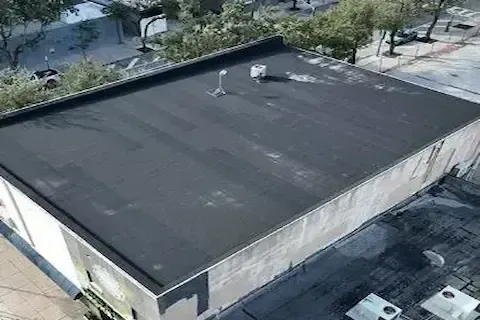
Complete commercial flat roof replacement for Plymouth office parks, medical facilities, and corporate campuses — system assessment through manufacturer warranty registration.

TPO membrane roofing for Plymouth's flat and low-slope commercial buildings — heat-welded seams and white reflective surface engineered for Minnesota's climate conditions.

EPDM rubber membrane roofing for Plymouth commercial buildings — fully adhered, mechanically fastened, or ballasted installation for flat and low-slope applications.
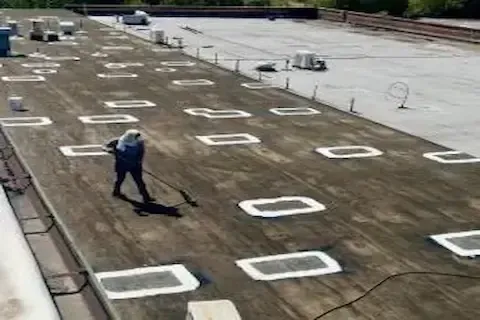
Commercial flat roof repair for Plymouth buildings — leak diagnosis, seam repair, flashing remediation, and written documentation for property management and insurance records.
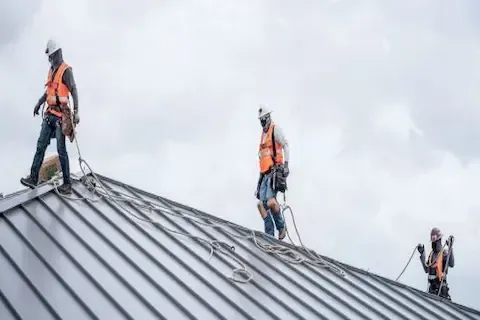
Commercial standing seam and metal panel roofing for Plymouth corporate campuses, medical facilities, and commercial properties seeking maximum lifecycle value and long-term performance.
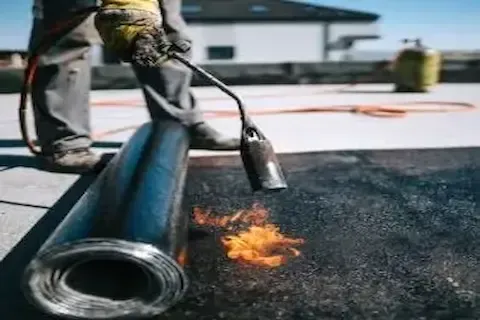
Modified bitumen roofing installation and replacement for Plymouth commercial and industrial buildings — torch-down, cold adhesive, and self-adhered systems for flat and low-slope applications.
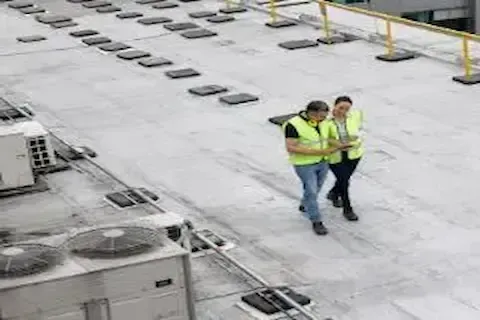
Professional commercial roof inspections for Plymouth properties — written reports with photos and prioritized action items for property managers, facilities directors, and insurance documentation.

PVC single-ply membrane roofing for Plymouth commercial buildings requiring chemical resistance — medical facilities, food service properties, and HVAC-heavy commercial structures.
Commercial roof coating systems for Plymouth flat roofs — silicone, acrylic, and elastomeric formulations to extend membrane life and defer replacement cost on qualifying buildings.
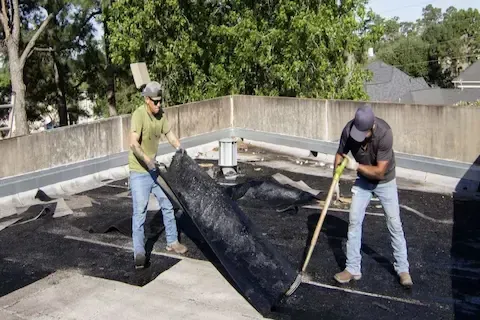
Emergency commercial roof repair for Plymouth office parks, corporate campuses, and industrial buildings — active leak response, temporary waterproofing, and insurance documentation.
Frequently Asked Questions
Commercial Roofing can be complex, and we’re here to provide answers to common questions. Here are some frequently asked questions from our clients.
Frequently Asked Questions about Commercial Roofing Contractor Plymouth MN
What types of commercial roofing systems do you install in Plymouth?
We install all major commercial flat roof systems including TPO, EPDM, PVC, modified bitumen, and standing seam metal roofing. We work with corporate office parks, medical facilities, warehouses, and multi-unit complexes throughout Plymouth and surrounding Hennepin County communities.
How much does commercial roof replacement cost in Plymouth, MN?
Commercial roof replacement in Plymouth, MN typically ranges from $8 to $20 per square foot depending on system type, building size, and access conditions. TPO and EPDM systems fall on the lower end while metal roofing runs higher. We provide detailed written estimates after an on-site inspection of your building.
How often should a commercial roof be inspected in Minnesota?
Most commercial property owners in Plymouth should schedule professional roof inspections twice per year — once in spring after freeze-thaw cycling and once in fall before winter. Properties with older flat roof systems or recent storm activity may benefit from additional inspections. Regular inspection protects warranty coverage and catches issues early.
Do you serve commercial properties outside of Plymouth?
Yes. We serve commercial properties throughout west Hennepin County including Minnetonka, Golden Valley, and St. Louis Park. Our service territory is designed around Plymouth's corporate corridor with most project sites reachable within 30 minutes from our base of operations.
What is the difference between TPO and EPDM for commercial buildings?
TPO is a thermoplastic membrane heat-welded at seams, offering strong energy efficiency and chemical resistance — the preferred choice for Plymouth's corporate offices and medical facilities. EPDM is a rubber membrane with taped seams, typically lower in cost and suited for older commercial buildings with simple flat roof profiles. We assess each building individually.
Are you licensed and insured for commercial roofing work in Minnesota?
Yes. We carry full commercial general liability insurance and Minnesota contractor licensing for commercial roofing work. We pull Hennepin County building permits for commercial roof replacement and new installation and operate in compliance with Plymouth's building department requirements for all permitted commercial roofing projects.
Need Commercial Roofing?
What Our Satisfied Clients Have to Say About Plymouth Commercial Roofers
We pride ourselves on delivering great results and experiences for each client. Hear directly from home and business owners who’ve trusted us with their Commercial Roofing needs.

We had a TPO roof replacement on our Plymouth office park building completed on schedule with zero tenant complaints. The crew coordinated work hours around our tenants and finished in four days. Professional team, clean work site, and all documentation was ready for our property management records.
Mark Larsson
Our commercial building on Medicine Lake Road had a persistent leak around a rooftop HVAC unit. The inspection report identified three separate flashing failures I had no idea about. Roofing services were done in one day and has not leaked since. Responsive, knowledgeable, and completely honest about what we actually needed.
Diane Holloway
We needed emergency repair after a hail event hit our corporate campus in Plymouth. They were on-site the next morning, documented everything for our insurance claim, and installed temporary protection while we scheduled the permanent repair. The entire process ran without disrupting a single tenant.
Tom Bergstrom
The Trusted Commercial Roofing Expert Near You
Ready to hear more about expert services at Plymouth Commercial Roofers?
Contact us today to receive a detailed, no-obligation quote.

Plymouth, MN & the Twin Cities metro
Monday-Friday: 9am-5pm, Saturday: 11am-3pm
