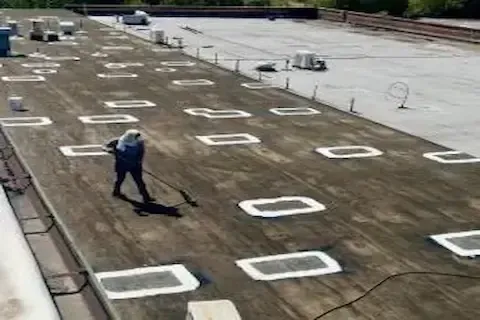
Commercial Roof Repair for Plymouth MN Office Buildings
Office buildings in Plymouth face unique roofing challenges that demand immediate attention when problems arise. Commercial roof systems protect valuable equipment, inventory, and operations, making prompt repair decisions critical for business continuity. Understanding when repairs are viable versus when replacement becomes necessary can save thousands in emergency costs while maintaining building integrity.
Common Commercial Roof Problems in Plymouth Office Buildings
Plymouth's climate creates specific stress patterns on commercial roofing systems. Temperature fluctuations between seasons cause expansion and contraction cycles that gradually weaken membrane connections and flashing joints. Most office building roof failures start with minor penetrations that allow moisture infiltration.
Flat and low-slope roofs dominate Plymouth's commercial landscape, making proper drainage essential. When gutters clog or drains backup during spring thaws, standing water accelerates membrane deterioration. EPDM and TPO single-ply systems commonly develop seam separations after five to seven years of Minnesota weather exposure.
Rooftop HVAC equipment creates additional vulnerability points. Vibration from heating and cooling units can loosen flashing over time, while condensation from equipment creates localized moisture problems. Many Plymouth office buildings also house telecommunications equipment that requires frequent roof access, increasing wear patterns around access points.
Wind damage from summer storms and winter conditions frequently affects edge details and parapet walls. Metal coping and gravel stops take particular abuse during severe weather events. Emergency repairs become necessary when these protective elements fail and expose the underlying roof system to direct weather infiltration.
Leak Detection and Emergency Response Procedures
Successful commercial roof repair starts with accurate leak location identification. Water rarely enters buildings directly above the source, especially on flat roofs where moisture travels along structural members before manifesting as interior damage. Professional leak detection uses electronic scanning, infrared imaging, and flood testing to pinpoint exact failure locations.
Time-sensitive emergency responses require immediate action to prevent escalating damage. Temporary tarping and emergency sealants provide short-term protection while permanent repair plans develop. Commercial Roof Repair specialists maintain emergency response protocols for Plymouth area office buildings experiencing active leaks.
Documentation becomes crucial during emergency situations. Photograph damage patterns, measure affected areas, and record weather conditions at the time of discovery. Insurance claims require detailed evidence, and proper documentation speeds the repair approval process. Maintain detailed logs of temporary measures taken to mitigate ongoing damage.
Safety protocols cannot be compromised during emergency responses. Wet roof surfaces create dangerous working conditions, particularly on low-slope systems. Professional contractors use proper fall protection equipment and establish safe working perimeters around damaged areas. Never attempt complex emergency repairs without appropriate safety measures.
Membrane Repair Techniques and Materials
Single-ply membrane systems require specialized repair approaches depending on the specific material composition. EPDM repairs typically involve solvent-based adhesives and patch materials that create permanent bonds with existing membrane surfaces. Clean preparation becomes critical for achieving long-lasting repairs that withstand Plymouth's weather cycles.
TPO membrane repairs use heat welding techniques to fuse patch materials with existing roof surfaces. Proper temperature control ensures complete fusion without damaging surrounding membrane areas. Modified bitumen systems respond well to torch-applied patches when ambient conditions allow safe flame application.
Seam repairs represent the most common membrane maintenance requirement. Failed seams allow moisture infiltration that can compromise insulation and structural decking. Re-sealing techniques vary by membrane type but generally require complete cleaning, primer application, and new sealant installation following manufacturer specifications.
Puncture repairs require careful evaluation to determine repair viability versus section replacement needs. Small punctures under two inches typically accommodate patch repairs, while larger damage may require membrane section replacement. Consider surrounding membrane condition when making repair versus replacement decisions.
Flashing and Detail Work Restoration
Flashing failures cause more commercial roof leaks than membrane problems in Plymouth office buildings. Proper flashing repair requires understanding how different materials interact with building movement and weather exposure. Metal flashing expands and contracts at different rates than membrane materials, creating stress points that require flexible connection methods.
Penetration flashing around pipes, vents, and equipment requires multi-layer protection systems. Base flashing provides primary water diversion, while counter flashing creates secondary protection against wind-driven moisture. Both components must remain flexible to accommodate building movement without creating separation gaps.
Parapet wall flashing presents particular challenges in Plymouth's climate. Freeze-thaw cycles create movement that can separate flashing from wall surfaces. Through-wall flashing prevents moisture infiltration into wall systems, while cap flashing protects exposed wall tops from direct weather exposure.
Equipment flashing requires regular maintenance due to vibration and thermal cycling from mechanical systems. Flexible sealants work better than rigid compounds around equipment penetrations. Consider upgrading to mechanical attachment systems when repeated sealant failures occur around the same penetrations.
Drainage System Maintenance and Repair
Proper drainage prevents most commercial roof problems in Plymouth office buildings. Clogged drains create standing water that accelerates membrane aging and increases structural loading beyond design limits. Regular drain cleaning prevents emergency overflow situations during heavy precipitation events.
Internal drainage systems require access for maintenance and emergency clearing. Removable drain covers allow debris removal without roof membrane damage. Consider installing leaf guards and debris baskets that reduce maintenance frequency while maintaining proper drainage capacity during storm events.
Scupper and gutter systems need regular inspection and cleaning. Ice dams during Plymouth winters can force water backup under roof edges, causing interior damage. Proper insulation and ventilation prevent ice dam formation, while heated cables provide additional protection in problem areas.
Slope adjustments may become necessary when drainage problems persist despite regular maintenance. Tapered insulation systems can redirect water flow toward functioning drains. Major slope corrections typically require professional engineering evaluation to ensure structural adequacy and code compliance.
Insulation Assessment and Repair Considerations
Wet insulation compromises thermal performance and creates conditions for mold growth and structural damage. Moisture detection in insulation systems requires specialized equipment to identify affected areas without unnecessary removal of functioning roof sections. Core sampling provides accurate moisture content readings.
Partial insulation replacement often proves more cost-effective than complete removal when damage remains localized. Modern insulation materials offer improved moisture resistance compared to older systems. Consider upgrading insulation performance during repair projects to improve building energy efficiency.
Vapor barrier integrity affects insulation performance and membrane longevity. commercial re-roofing planning fundamentals include proper vapor barrier installation to prevent condensation problems. Repair projects must maintain vapor barrier continuity to prevent future moisture infiltration.
Insulation attachment methods influence repair procedures and long-term performance. Mechanically fastened systems allow easier replacement of damaged sections, while adhered systems may require larger replacement areas. Consider attachment upgrade opportunities during major repair projects.
Cost Analysis: Repair Versus Replacement Decision Factors
Financial analysis should consider both immediate repair costs and long-term building operational expenses. Frequent repairs on aging systems often exceed replacement costs when analyzed over five-year periods. Energy efficiency improvements from new systems can offset replacement costs through reduced utility expenses.
Age and condition of existing roof systems significantly influence repair viability decisions. Roofs approaching 15-20 years typically warrant replacement consideration rather than major repairs. Document existing system age and maintenance history to support decision-making processes.
Building occupancy and operational requirements affect repair timing and methodology. Office buildings cannot tolerate extended disruptions that impact tenant operations. Phased repair approaches may prove necessary to maintain building functionality during extensive repair projects.
Insurance coverage and deductible structures influence repair versus replacement financial analysis. Some policies provide better coverage for complete replacement compared to repeated repairs. Consult insurance representatives before making major repair versus replacement decisions.
Professional Contractor Selection and Project Management
Commercial roof repair requires specialized expertise and proper licensing for Plymouth area work. Verify contractor insurance coverage, worker compensation policies, and local licensing requirements. Request recent commercial project references from similar office building applications.
Material warranties and installation guarantees provide important protection for commercial roof investments. Understand warranty terms and conditions, including maintenance requirements that preserve coverage. Some manufacturers require certified installer participation to maintain material warranties.
Project scheduling becomes critical for office building repairs to minimize tenant disruption. Coordinate repair activities with building management and tenant operations. Consider after-hours and weekend work schedules for repairs that might impact normal business activities.
Quality control procedures ensure repair work meets specifications and industry standards. Regular inspection checkpoints during repair projects identify problems before they become costly corrections. Document completed work with photographs and inspection reports for maintenance records and warranty claims.
When damage can't wait for a scheduled visit, see our guide to emergency commercial roof repair response for how dispatch, dry-in, and insurance documentation work.
Repairs on an occupied building live or die on communication. Our guide to tenant coordination during commercial roof repairs covers notice timing, noise windows, parking impact, and HVAC intake shutdowns.
