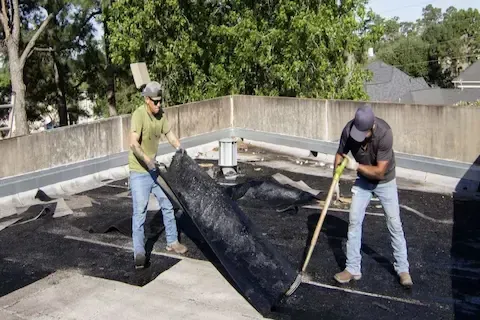
What to Do After Plymouth Commercial Roof Storm Damage
After Plymouth commercial roof storm damage, act in this order: assess safety before re-entering, document all visible damage with photos and video, contain interior water with buckets or tarps, contact an emergency commercial roofer for an urgent inspection, and notify your insurance carrier the same day. Do not attempt permanent repairs yourself. The goal in the first 24 hours is to prevent secondary damage, create a clear record for your claim, and get a licensed professional on-site as quickly as possible. Every hour of delay allows water infiltration to spread, increasing both structural risk and claim complexity.
Is It Safe to Enter the Building After a Storm?
Safety comes first. Before anyone enters your Plymouth facility after a severe storm, walk the perimeter and look for obvious structural compromise — sagging sections of the roof deck, walls that have shifted, downed power lines near the building, or standing water near electrical panels. If you notice any of these conditions, keep personnel out and call the appropriate emergency services. If the exterior looks stable, enter cautiously and check ceilings for bulging or active drips, which can indicate significant water pooling above the membrane. A bulging ceiling can collapse without warning, so if you see one, puncture it carefully at the lowest point with a screwdriver to drain it in a controlled way rather than letting it fail on its own.
How Do You Document Commercial Roof Storm Damage Correctly?
Insurance adjusters and contractors both rely on documentation you collect in the first hours. Use your phone to record a continuous video walkthrough of all affected interior areas before anything is moved or cleaned up. Follow that with still photos of every stain, crack, puncture, displaced flashing, or pooled water you can see from ground level and from any safe rooftop access point. Time-stamp everything. Note the date and time of the storm, wind direction if known, and any hail size reports from the National Weather Service for the Plymouth area — these reports are publicly available and support your claim. Save any debris that came through the roof or landed on mechanical equipment. That physical evidence matters.
What Interior Steps Stop Water Damage From Spreading?
While you wait for your emergency roofer to arrive, focus on containment. Place buckets under active drips. Lay plastic sheeting over inventory, machinery, workstations, and server equipment. If water is pooling on the floor, use a wet-dry vacuum or floor squeegee to move it toward a drain. Shut off electrical circuits in any area where water is actively entering — do not wait to see whether the water reaches an outlet or panel. Move critical paper records and portable equipment away from affected zones. These steps do not fix the roof, but they limit the secondary damage that often costs more than the roof repair itself and can complicate your insurance settlement if left unaddressed.
When Should You Call an Emergency Commercial Roofer in Plymouth?
Call immediately — not the next morning, not after the weekend. Storm damage to a flat or low-slope commercial roof in Plymouth can escalate within hours, especially during Minnesota's freeze-thaw cycles where water that enters during a storm can freeze overnight and expand existing gaps significantly. A qualified contractor will apply emergency tarping or temporary membrane patches to stop active infiltration, provide a written damage assessment for your insurance carrier, and advise on the scope of permanent repair needed. For Emergency Roof Repair response, choose a contractor who specifically handles commercial systems — TPO, EPDM, built-up roofing, and metal panel systems all require different emergency approaches than residential shingles.
How Do You Start an Insurance Claim for Commercial Roof Damage?
Contact your commercial property insurance carrier the same day the storm hits. Most policies require prompt notification as a condition of coverage — delayed reporting can give the carrier grounds to dispute portions of the claim. Have your policy number ready, along with the documentation you collected. Request a claim number and ask about their timeline for sending an adjuster to your Plymouth site. Ask specifically whether you are authorized to proceed with emergency temporary repairs before the adjuster arrives — most carriers allow this to prevent further loss, but get it confirmed in writing or by recorded call. Keep all invoices for emergency services, temporary materials, and interior mitigation supplies, as these costs are typically covered under the same claim. For additional context on what to expect during urgent situations, review these emergency roof response essentials before your adjuster visit.
What Mistakes Do Plymouth Business Owners Make After Roof Storm Damage?
The most common error is waiting to see if the problem is "really that bad." A small puncture or displaced flashing in a Plymouth summer storm can allow gallons of water per hour into the roof assembly, saturating insulation that then holds moisture against the deck for weeks. Wet insulation is invisible from below and does not dry out on its own — it accelerates deck rot and mold growth. A second common mistake is signing a contract with the first contractor who shows up uninvited after a storm. Storm-chasing contractors frequently offer low initial bids, perform substandard temporary repairs, and then disappear when permanent work is needed or when the insurance claim is disputed. Use a licensed, locally established commercial roofing company with verifiable references from Plymouth or the surrounding Hennepin County area.
