How Long TPO Roofing Lasts on Plymouth Commercial Buildings
TPO roofing on Plymouth commercial buildings typically lasts 20 to 30 years when properly installed and maintained. Thinner 45-mil membranes at the lower end of budget installations may reach 15 to 20 years, while 60-mil and 80-mil membranes with professional heat-welded seams and annual inspections regularly exceed 25 years in Minnesota's climate. The variables that most affect lifespan are membrane thickness, installation quality, drainage design, and how consistently your maintenance schedule is followed. Plymouth's freeze-thaw cycles and heavy snow loads add stress that makes these factors especially important for flat and low-slope commercial roofs.
What Is the Average Lifespan of TPO Roofing in Plymouth?
Most Plymouth commercial building owners can expect 20 to 30 years of service life from a professionally installed TPO system. Industry warranties typically range from 15 to 30 years depending on the membrane manufacturer and installer certification level. GAF, Firestone, and Carlisle — three of the most common TPO manufacturers used in the Twin Cities market — all offer extended warranty coverage on their thicker membranes when installed by certified contractors. The warranty period is a useful baseline, but actual lifespan often exceeds it when buildings receive consistent annual inspections and prompt repair of any punctures or seam issues.
How Does Membrane Thickness Affect How Long TPO Lasts?
Membrane thickness is one of the clearest predictors of TPO longevity. There are three standard thicknesses used on Plymouth commercial roofs:
- 45-mil membranes — Entry-level thickness, adequate for smaller buildings with light foot traffic, typical lifespan 15 to 20 years
- 60-mil membranes — The most common commercial specification in Minnesota, balancing cost and durability, typical lifespan 20 to 25 years
- 80-mil membranes — Specified for high-traffic roofs, rooftop equipment zones, and buildings needing maximum impact resistance, typical lifespan 25 to 30 or more years
Thicker membranes resist punctures from maintenance workers, rooftop HVAC technicians, and debris impacts more effectively. On Plymouth industrial and warehouse buildings where rooftop foot traffic is frequent, upgrading to 60-mil or 80-mil is consistently the better long-term investment. For a full breakdown of material and system options, review our TPO flat roofing essentials guide.
Does Minnesota's Climate Shorten TPO Roof Life?
Minnesota's climate creates specific stressors that impact TPO membrane performance over time. Plymouth experiences temperature swings from well below zero in January to over 90°F in July — a range that causes membranes to expand and contract repeatedly across every annual cycle. Properly heat-welded seams handle this thermal movement well, but mechanically fastened installations with poor seam quality can develop stress points that allow water infiltration within 10 years. Snow accumulation adds roof load stress, and ice damming on low-slope designs can force water under membranes if flashing details were not installed correctly. None of these factors eliminate TPO as the right choice for Plymouth flat roofs — they simply make professional installation and annual inspection non-negotiable for achieving full service life.
What Maintenance Extends TPO Roofing Lifespan?
The difference between a TPO roof that lasts 18 years and one that lasts 28 years is almost always maintenance history. Practical steps that extend service life on Plymouth commercial roofs include:
- Annual professional inspection, ideally each spring after snow season and each fall before freeze
- Clearing roof drains and scuppers of debris to prevent ponding water
- Prompt repair of any punctures, blisters, or open seams — even small defects allow water to track under the membrane
- Keeping rooftop equipment properly pad-mounted so HVAC units and pipe penetrations do not abrade the membrane
- Documenting all repairs and inspection findings to support warranty claims if needed
Plymouth building owners who schedule maintenance through their roofing contractor rather than deferring it routinely get five to ten additional years of service life compared to buildings that only receive attention when visible leaks appear inside. Our TPO Roofing service includes maintenance planning tailored to your building's specific conditions and age.
When Should a Plymouth Building Owner Consider Replacement Instead of Repair?
TPO membranes reach a point where the cost and frequency of repairs outpaces the economics of replacement. Warning signs that a Plymouth commercial roof is approaching end of service life include:
- Widespread membrane shrinkage pulling flashings away from walls and penetrations
- Chronic ponding water in multiple locations despite drain maintenance
- Seam failures appearing across large areas rather than at isolated points
- Insulation that has become saturated in multiple roof sections, confirmed by moisture scanning
- A repair history showing recurring leaks at the same locations
If your TPO roof is approaching 20 years and showing two or more of these signs, a professional assessment with core cuts and infrared scanning will give you the data needed to make a replace-versus-repair decision confidently. Plymouth commercial property managers benefit from getting this assessment before a building sale, lease renewal negotiation, or capital planning cycle.
How Does Installation Quality Affect TPO Longevity in Plymouth?
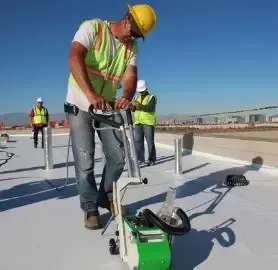
Installation quality is the single variable most within your control at the time of a new TPO project. Heat-welded seams performed by an experienced crew create bonds that are stronger than the membrane itself — a properly welded seam will not fail before the surrounding membrane deteriorates. In contrast, poorly welded seams with cold welds, voids, or inadequate overlap width can fail within three to five years, allowing water to enter the roof assembly and damage insulation and decking long before the membrane's expected end of life. Verifying that your Plymouth roofing contractor holds manufacturer certification for the specific TPO system being installed is the most reliable way to protect your investment from installation-related early failures.
