Is Modified Bitumen Good for Plymouth Commercial Roofs
Modified bitumen is a strong choice for Plymouth commercial roofs. It layers reinforced asphalt over a built-up base, creating a membrane that handles Minnesota's freeze-thaw cycles, heavy snow loads, and rooftop equipment traffic. Torch-down and self-adhered versions both perform well in cold climates. A properly installed mod bit roof typically lasts 20 years with routine maintenance. If your Plymouth building has a low-slope or flat roof and sees foot traffic from HVAC technicians or other trades, modified bitumen delivers reliable waterproofing and puncture resistance at a competitive installed cost.
What Makes Modified Bitumen Different From Standard Built-Up Roofing?
Standard built-up roofing (BUR) stacks multiple layers of asphalt and felt. Modified bitumen takes that concept further by adding polymer modifiers—either APP (atactic polypropylene) or SBS (styrene-butadiene-styrene)—directly into the asphalt compound. SBS modifiers make the membrane rubbery and flexible, which matters enormously during Plymouth winters when temperatures drop well below zero. APP modifiers increase UV resistance and handle summer heat. The result is a single-ply or two-ply membrane that performs like a multi-layer system without the labor cost of traditional BUR. For Plymouth commercial property owners comparing options, that combination of cold-weather flexibility and heat resistance is the primary advantage over older asphalt systems.
How Does Modified Bitumen Handle Minnesota's Weather Extremes?
Plymouth sees temperature swings from -20°F in January to 95°F in July—a 115-degree range that stresses roofing materials relentlessly. SBS-modified membranes stay pliable at low temperatures, preventing the cracking and brittle fractures that end lesser membranes prematurely. When snowpack accumulates on flat commercial roofs near Highway 55 or around the Rockford Road corridor, the membrane flexes under load rather than fracturing. In summer, the granule surface of torch-down cap sheets reflects solar radiation and prevents blistering. This two-directional performance across Plymouth's climate calendar is why regional roofing professionals consistently specify mod bit for low-slope commercial applications throughout the northwest metro.
What Are the Installation Methods and Which Is Best for Plymouth?
Three primary installation methods exist for modified bitumen: torch-down application, cold adhesive application, and self-adhered peel-and-stick membranes.
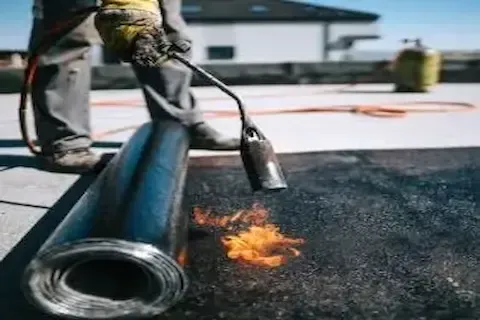
- Torch-down (heat welded): A propane torch melts the underside of the membrane, creating a fused bond to the substrate. This method produces the most durable seams and works well on Plymouth commercial roofs where wind uplift is a concern.
- Cold adhesive: Solvent-based adhesive bonds the membrane without open flame. Preferred when fire restrictions apply near occupied spaces.
- Self-adhered: Peel-and-stick membranes work well in repair scenarios or when torch-down is restricted. Seam integrity depends heavily on surface preparation.
For most Plymouth commercial buildings—offices, warehouses, retail strip centers—torch-down two-ply systems offer the best long-term value. The fused seams resist wind-driven rain infiltration better than adhesive alternatives, which matters given Minnesota's summer storm patterns. If you want details on layering strategy and base sheet selection, review the modified bitumen roofing fundamentals post for a full breakdown.
How Long Does a Modified Bitumen Roof Last on a Commercial Building?
A properly installed two-ply torch-down system on a Plymouth commercial roof should deliver 18 to 22 years of service life with routine maintenance. Single-ply applications or cold-adhesive systems typically fall in the 15 to 18 year range. Key variables that affect longevity include:
- Substrate condition: Installing over a deteriorated deck shortens membrane life regardless of quality.
- Drain maintenance: Ponding water accelerates seam degradation. Plymouth commercial roofs need drains cleared before freeze-up each fall.
- Foot traffic management: HVAC service, rooftop signage installation, and other trades cause punctures. Walk pads at access points extend membrane life significantly.
- Annual inspection: Catching seam separations or flashing lifts early prevents interior damage and extends membrane service.
The 20-year benchmark is achievable for Plymouth buildings that commit to a basic maintenance schedule. Many property managers near the Plymouth Business Center and along Carlson Parkway renew their maintenance agreements annually specifically to protect their mod bit investment.
Is Modified Bitumen Cost-Effective Compared to Single-Ply Membranes?
When comparing Modified Bitumen Roofing against TPO or EPDM single-ply systems, the installed cost per square foot is generally comparable. Mod bit often comes in slightly higher due to torch equipment and two-ply labor, but the superior puncture resistance and repairability offset that premium over the roof's service life. Single-ply membranes puncture more easily and require full membrane replacement when damaged sections are extensive. Modified bitumen can be spot-repaired with compatible material, reducing long-term maintenance costs for Plymouth commercial operators who have active rooftop equipment.
What Are Common Problems With Modified Bitumen Roofs?
Even a high-quality mod bit installation can develop problems without proper maintenance. The most common issues on Plymouth commercial roofs include:
- Seam adhesion failure: Caused by improper torch technique during installation or thermal cycling over time. Visible as raised or bubbled seam edges.
- Flashing separation at penetrations: HVAC curbs, pipe boots, and wall terminations are highest-risk areas. Check annually.
- Granule loss on cap sheet: Surface granules protect the membrane from UV degradation. Heavy granule loss signals aging and approaching replacement.
- Ponding water zones: Flat Plymouth commercial roofs with inadequate slope trap water. Even modified bitumen degrades faster under persistent ponding.
Addressing these issues during routine inspections—particularly before Plymouth's winter freeze—keeps minor maintenance from becoming major replacement projects.
