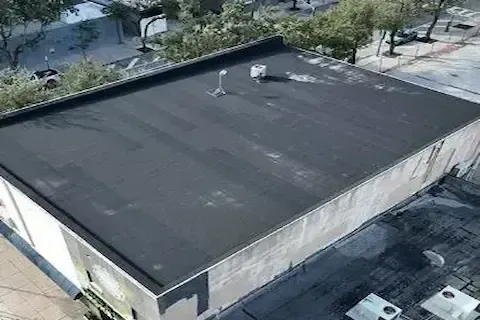
Phased Corporate Campus Roof Replacement Plymouth MN
Managing a multi-building corporate campus in Plymouth, MN means thinking about infrastructure in layers — and few infrastructure decisions carry more financial weight than a phased roof replacement program. Unlike a single-building re-roof, a campus project involves coordinating multiple structures, tenants, budget cycles, and contractor schedules across months or even years. When done well, phasing protects your capital, minimizes operational disruption, and keeps every building in your portfolio performing at a high level. When done poorly, it creates cost overruns, coverage gaps, and tenant friction that can outlast the roofs themselves.
Why Corporate Campuses Require a Different Approach
A corporate campus in Plymouth typically includes several interconnected buildings — office towers, warehouse annexes, parking structures, or auxiliary facilities — each with its own roof age, surface type, and performance history. Treating all of them as a single project is rarely practical. Capital budgets have annual limits, tenants have operational constraints, and not every roof fails on the same timeline.
Phasing solves this by breaking the work into logical segments that align with your building conditions, fiscal year planning, and occupancy schedules. A well-designed phase plan doesn't just react to which roof is worst — it anticipates which roofs are approaching critical thresholds and sequences replacement to prevent emergency spending.
For Commercial Roof Replacement projects across Plymouth campuses, facility directors typically benefit most from a phased approach when their portfolio spans more than three buildings or when the total replacement cost would strain a single-year capital budget.
Assessing the Campus Before Sequencing Begins
Effective phasing starts with a comprehensive condition assessment of every roof on your campus. This isn't a visual walkover — it means infrared moisture scanning, core samples where applicable, and documented membrane integrity reports for each building. The goal is a data-driven priority ranking, not guesswork.
Your assessment should capture:
- Current membrane condition and estimated remaining useful life per building
- Existing insulation R-value and compliance with current Minnesota energy codes
- Known leak history and any interior damage to equipment or ceilings
- Roof deck condition, including any signs of structural compromise
- Drain and penetration performance across each section
Once you have condition data for every structure, you can build a replacement sequence that prioritizes critical buildings first while scheduling stable roofs for later phases. This protects you from putting resources into a building that didn't need immediate attention while a higher-risk structure continued deteriorating.
Sequencing Buildings Around Tenant Operations
Plymouth corporate campuses often house multiple tenants or departments with unique sensitivity to construction overhead. A data center annex cannot tolerate dust infiltration or vibration during business hours. A manufacturing wing may have narrow windows where production pauses. Administrative buildings may need to coordinate around fiscal quarter closes or large internal meetings.
Sequencing that ignores these operational realities will generate friction, complaints, and pressure to compress timelines in ways that hurt quality. The better approach is to map each building's operational calendar before finalizing your phase schedule. Build in buffer time between phases to allow for weather delays without cascading into the next building's window.
Communication matters here as much as scheduling. Tenant and department heads who receive early, specific notice of work windows — not just a general warning that "re-roofing is planned" — are far more cooperative during execution. Provide projected start dates, estimated duration, noise and access restrictions, and a clear point of contact for concerns.
Timing Phases Across Capital Budget Cycles
One of the most practical advantages of phased replacement is its alignment with annual capital expenditure planning. Plymouth facility managers working within a corporate finance structure rarely have the authority to approve a full campus re-roof as a single line item — the number is simply too large. Phasing converts that number into a multi-year capital program with predictable annual spend.
To make this work, your phase plan needs to be detailed enough to defend in a capital planning session. That means building-level cost estimates, not just a campus-wide total. It means escalation assumptions that account for material and labor cost increases over the program's duration. And it means a contingency budget for each phase that reflects realistic risk — not just a flat percentage applied to the whole program.
Reviewing commercial re-roofing planning fundamentals before entering your capital planning cycle gives your finance stakeholders a clear framework for understanding why phased investment is more cost-effective than emergency repairs across a degraded portfolio.
Managing Contractor Continuity Across Phases
A phased campus program works best when the same contractor handles all phases. Continuity means they already understand your roof assemblies, drain configurations, equipment penetrations, and any site-specific access constraints. Each subsequent phase goes faster and with fewer surprises.
Continuity also creates accountability. A contractor who knows they're returning for Phase 3 and Phase 4 has strong incentive to do clean, lasting work in Phase 1. If you re-bid each phase separately, you lose that dynamic — and you spend procurement time between every phase rather than staying on schedule.
When negotiating a multi-phase agreement with a Plymouth commercial roofing contractor, ask for fixed unit pricing for the program's duration or a clear escalation formula tied to a published materials index. This gives your finance team predictable numbers without locking you into a price that ignores real-world cost movement.
Minnesota-Specific Considerations for Campus Phasing
Plymouth's climate shapes how you design and time your phases. Minnesota's freeze-thaw cycles accelerate membrane failure on buildings with any existing moisture infiltration, which means roofs that test marginal in late summer can deteriorate significantly by spring. Factor that reality into your risk ranking — a marginal roof entering winter may warrant moving up in the sequence.
Installation windows matter too. Most commercial roofing systems in Plymouth have temperature minimums for adhesives, sealants, and modified bitumen applications. Planning phases that begin in late spring and complete before November gives your contractor maximum flexibility and avoids the cold-weather complications that compress schedules and increase risk of improper adhesion.
Local permitting in Plymouth also applies to each building separately. If your campus spans multiple parcels or was developed under different permits, confirm with your contractor whether each phase requires its own building permit and inspections. Getting ahead of this avoids administrative delays that stall construction midway through a phase.
Protecting the Campus During the Transition Period
During a multi-year phasing program, some buildings will have new roofs while others are still operating on aging systems. This transition period creates a management challenge: you need to actively maintain buildings waiting for their replacement phase without spending money on a roof you're replacing in 18 months.
The answer is targeted maintenance — not full restoration, but proactive sealing of flashings, drains, and penetrations that are most likely to cause interior damage before replacement arrives. Ask your contractor to include a maintenance scope for deferred buildings as part of your phasing agreement. This reduces emergency call risk and keeps damage claims from compressing your replacement budget.
A phased corporate campus roof replacement program in Plymouth, executed with solid condition data, realistic scheduling, and consistent contractor relationships, gives facility directors a clear path from a degraded portfolio to a fully protected one — without disrupting operations or overwhelming capital budgets in any single year.
