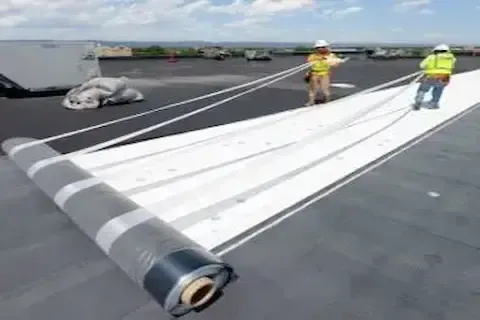
PVC Roofing Heat Welding Summer Schedule Plymouth MN
Summer in Plymouth, MN creates a narrow but workable window for commercial flat roofing projects. The combination of longer daylight hours, warmer ambient temperatures, and reduced precipitation makes June through August an attractive season for PVC membrane installation. But heat welding PVC seams is a precision process, and the same summer conditions that make scheduling easier can also complicate execution if crews are not working within the right parameters. Understanding how temperature, humidity, and crew sequencing interact during peak summer months is essential for any building owner or facility manager planning a commercial roofing project in Plymouth.
Why Summer Scheduling Matters for PVC Heat Welding
PVC heat welding fuses membrane seams using a hot-air gun or automatic welder that melts the two overlapping edges and presses them together into a single continuous bond. The process is sensitive to ambient conditions in ways that other roofing methods are not. When the air temperature is too low, the membrane becomes stiff and less receptive to bonding. When it is too high, particularly during direct summer sun exposure, the membrane surface can soften unevenly before the welder even makes contact, which affects seam uniformity and long-term watertightness.
In Plymouth, summer daytime highs regularly reach into the upper 80s and can climb above 90°F during July heat events. Rooftop surface temperatures on a dark substrate can exceed ambient air temperatures by 30 to 50 degrees. A white PVC membrane reflects more heat than dark roofing materials, but the substrate underneath and the equipment stored on the roof can still create localized hot zones that affect welding quality. This is why experienced commercial roofing contractors in Plymouth do not simply schedule PVC work for any summer day that looks clear on the calendar.
Ideal Temperature and Humidity Thresholds
Most PVC membrane manufacturers specify a welding window between approximately 40°F and 90°F ambient air temperature. Summer in Plymouth rarely dips below that floor, but the upper threshold matters more during July and August. When ambient temperatures approach or exceed 85°F, welders typically need to reduce their equipment temperature settings and slow their travel speed to avoid over-welding, which can cause the membrane to pucker, wrinkle, or thin at the seam edge.
Humidity is a secondary but important variable. High relative humidity, common in Plymouth during late July thunderstorm patterns, does not directly prevent welding but can introduce moisture at the seam overlap that compromises bond strength if installation continues immediately after a rain event. Crews typically need to allow membranes to dry thoroughly before resuming weld work. Surface moisture that is invisible to the eye but still present at the overlap can create steam pockets that weaken the fusion zone.
The practical sweet spot for summer heat welding in Plymouth is early morning through mid-afternoon on days when ambient temperatures are between 70°F and 85°F with relative humidity below 70 percent. These conditions allow automatic welders to maintain consistent temperature and speed settings without constant adjustment, which directly supports seam consistency across a large roof field.
Crew Sequencing for Summer Efficiency
Larger commercial roofing projects in Plymouth benefit from structured crew sequencing during summer months. Rather than deploying all crews to the same roof section at once, experienced contractors stage their work so that membrane installation, welding, and quality inspection happen in coordinated waves across the roof field.
A common approach involves one crew laying and positioning membrane rolls in the early morning before peak heat arrives. A second crew follows behind with automatic welders, working the seams while the membrane is still in an optimal temperature range. A third crew or team lead performs probe testing and visual inspection of completed seams, identifying any areas that need hand welding corrections before the workday ends. This staging approach reduces the window during which fresh seams are exposed to foot traffic, which is especially important during summer when crews need to move across the roof frequently to manage material staging.
For PVC Roofing projects that span multiple weeks, contractors in Plymouth often schedule the most seam-intensive sections for early in the project when crews are fresh and conditions are more predictable, reserving flashing work and penetration detailing for afternoons or days when ambient heat makes field welding more difficult.
Managing Direct Sun Exposure on the Roof
White PVC membrane reflects significantly more solar radiation than TPO or modified bitumen products, which is one of its primary benefits for commercial building owners in Plymouth concerned about cooling costs. During installation, however, that same reflectivity creates glare conditions that affect crew comfort and visual acuity. Workers performing quality inspection on summer afternoons are checking seam edges against a highly reflective white surface under direct sunlight, which can cause eye fatigue and missed defects if proper eye protection and crew rotation are not built into the schedule.
Experienced project managers on Plymouth commercial roofing sites rotate inspection duties during peak afternoon sun hours and use shade structures or temporary canopies over quality control checkpoints when the project scope justifies the setup time. These are not luxuries but practical measures that protect both crew health and seam inspection accuracy.
Local Considerations Specific to Plymouth
Plymouth's location in Hennepin County means commercial roofing projects are subject to local permit timelines and inspection scheduling that can affect how work is staged through the summer. Projects that begin in late June may need to account for the Fourth of July holiday week, when municipal offices and inspection departments operate on reduced schedules. Planning for that gap in advance prevents unnecessary delays in project completion.
Plymouth also sits within a climate zone where summer thunderstorm activity can develop quickly in the afternoon, particularly in July and August. Crews working on large commercial roofs need to monitor National Weather Service alerts actively and have a clear protocol for securing materials and covering exposed substrate if a storm approaches mid-installation. Proper planning here is a safety issue as much as a quality control one. For more background on PVC system fundamentals, review PVC membrane roofing essentials before finalizing your project schedule.
Setting Realistic Expectations for Summer Projects
Summer is the right season for PVC heat welding in Plymouth when both the building owner and the roofing contractor approach it with appropriate planning. The longer days and warmer baseline temperatures create genuine advantages for project completion speed and membrane flexibility. But the heat and humidity variables require active management, not passive reliance on favorable weather. Contractors who build temperature monitoring, crew sequencing, and weather contingency into their summer schedules consistently produce better seam quality outcomes than those who treat summer as an automatically easy season for commercial flat roofing work.
