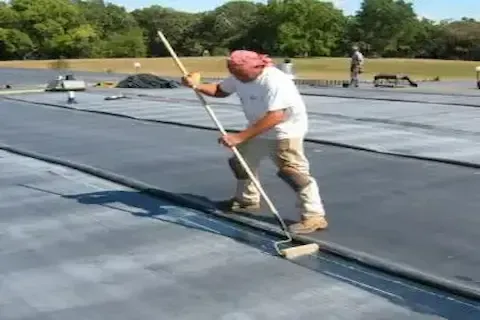
Winter EPDM Roof Shrinkage on Plymouth Commercial Buildings
Minnesota winters are hard on every roofing material, but EPDM rubber membranes face a specific mechanical challenge that gets overlooked until damage becomes visible: shrinkage. As temperatures drop well below freezing across the Plymouth metro area, EPDM membranes contract. On a well-installed roof, that contraction is absorbed without consequence. On a roof with aging adhesive, inadequate fastening, or prior installation shortcuts, that contraction pulls the membrane away from critical edge points and creates the conditions for serious water intrusion.
What EPDM Shrinkage Actually Means
Shrinkage in an EPDM membrane is not a defect in the material itself. EPDM is a synthetic rubber compound, and like all rubber, it responds to temperature change by contracting in the cold and expanding in the heat. The problem arises when that movement is restricted at some points and not others, or when the adhesive bond holding the membrane to the substrate weakens over time.
When an EPDM membrane shrinks, it generates significant tensile stress. That stress has to go somewhere. It typically pulls hardest at corners, parapets, curbs, and anywhere the membrane is mechanically terminated. Over several seasonal cycles, the cumulative effect is visible deformation, lifting, and in more advanced cases, tearing.
Plymouth commercial properties are particularly exposed to this dynamic because the region experiences some of the most dramatic temperature swings in the continental United States. A roof membrane that expands during a warm autumn week and then faces sudden sub-zero temperatures in January is working hard, cycle after cycle, year after year.
Where Shrinkage Damage Shows Up First
Knowing where to look helps property managers catch problems before they escalate. EPDM shrinkage damage does not appear uniformly across a roof. It concentrates at specific structural locations.
- Parapet walls and low-slope intersections: The membrane terminates along parapet walls, and shrinkage tension pulls it away from the termination bar or adhesive line. You may see the membrane pulling down from the wall flashing or lifting at the base of the parapet.
- Roof corners: Corner geometry amplifies stress. A membrane shrinking from multiple directions concentrates that force at inside and outside corners, which is often where the first tears appear.
- Penetration flashings: Around HVAC curbs, pipes, and drains, the membrane is bonded to vertical surfaces. Shrinkage tension compromises those bonds and allows gaps to open where water can enter.
- Seams: Fully adhered EPDM systems use seam tape or adhesive at overlapping membrane edges. Shrinkage stress is transmitted through the full membrane surface and concentrated at seams, which can delaminate under repeated stress cycles.
Conditions That Make Shrinkage Worse
Not every EPDM roof experiences the same degree of shrinkage damage. Several factors determine how severely a given roof responds to cold-weather contraction.
Membrane age is the most significant factor. EPDM naturally loses plasticizers over time, becoming stiffer and less elastic. An older membrane has less capacity to absorb contraction stress without pulling at termination points. Roofs installed fifteen or more years ago on Plymouth commercial buildings may show visible shrinkage effects even if they were properly installed.
Installation quality matters enormously. If the membrane was installed without adequate adhesive coverage, or if termination bars were fastened at insufficient intervals, the bond strength under tensile stress is compromised from the start. Cold temperatures are simply the event that reveals what was already a marginal installation.
Drainage problems compound the issue. Standing water that freezes on the membrane surface adds weight and creates localized stress points. When ice forms at parapet edges or around drains, it mechanically loads the membrane in ways that accelerate shrinkage-related separation.
Roof deck movement is another factor specific to commercial construction. Structural deflection under snow load shifts the deck slightly, and an EPDM membrane bonded to a moving substrate experiences additional strain beyond thermal contraction alone.
Reading the Visual Signs Before Winter Sets In
The best time to identify shrinkage vulnerability is during a fall inspection, before temperatures drop far enough to cause additional stress. If you manage a Plymouth commercial building with an EPDM roof, look for these indicators during pre-winter walkthroughs.
Membrane that is tented or bridging at corners is already under tension. The membrane is pulling away from the substrate and the geometry of the corner is holding it temporarily in a raised position. This is a high-priority repair target.
Flashing that shows gaps, particularly at the base of parapet walls or around curb flashings, indicates the membrane has already moved past the adhesive bond line. Even a small gap at a flashing is a direct water entry path once snow starts melting on the roof surface.
Wrinkles or ridges running across the field of the membrane, away from edges, suggest the membrane is reacting to substrate movement or has been installed with insufficient slack to accommodate contraction. These field wrinkles can indicate developing stress concentration before edge separation becomes visible.
For a thorough understanding of how EPDM systems are constructed and why each component matters, reviewing EPDM rubber roof basics provides useful context for evaluating what your inspector reports.
Repair Priorities and Timing
Shrinkage damage does not stop progressing once it starts. Each thermal cycle adds incremental stress to already compromised areas. Waiting until spring to address damage identified in December means three to four additional months of movement working against the membrane at the most vulnerable points.
Emergency repairs to open flashings or torn membrane sections should happen as soon as possible, even in cold weather. EPDM splice adhesives and seam tapes can be applied in cold conditions with the appropriate low-temperature formulations, and a qualified roofing contractor working on Plymouth commercial properties will carry the right materials for winter repair work.
More extensive repairs, including full flashing replacement at parapets or termination bar re-installation, are better planned for late winter or early spring when sustained cold temperatures are less likely to interfere with adhesive cure times. The goal of winter emergency repairs is to stop water entry and stabilize the most critical failure points until more comprehensive work can be scheduled.
When evaluating the scope of repairs needed, it helps to work with a contractor who specializes in commercial flat roofing rather than a general roofing company. The specific mechanics of EPDM shrinkage, the correct adhesive systems for different repair scenarios, and the inspection protocols for identifying subsurface damage all require hands-on familiarity with this particular material.
If your Plymouth commercial property has an EPDM roof that has not been inspected in the past twelve months, scheduling that inspection now gives you a clear picture of its condition before the most demanding part of the season arrives. For EPDM Roofing services including inspection, repair, and re-flashing, working with contractors who understand the specific demands that Minnesota winters place on rubber roofing systems is the most direct way to protect your building through the cold months ahead.
